MYCRANE WORLD
Join the Future of Cranes & Heavy Equipment Trading
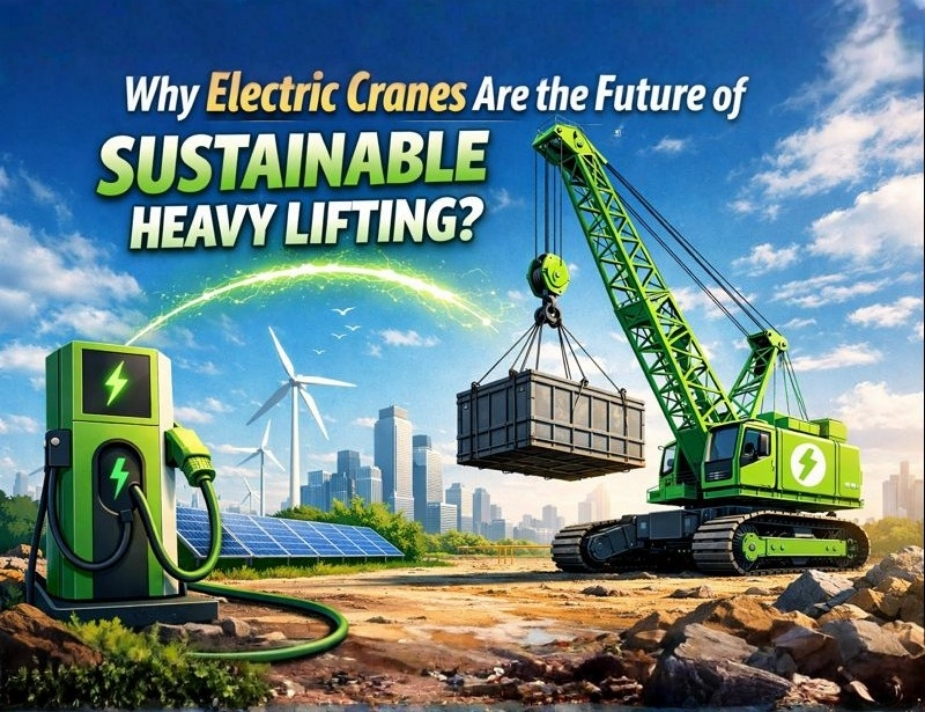
Why Electric Cranes Are the Future of Sustainable Heavy Lifting
The electric crane is no doubt the game-changer for this industry related to lifting technology.
The Environmental Imperative: A Primer on the Requirements of Electric Cranes
The energy and process-related CO2 emissions in the world account for almost 40% in the constructed environment. It is required that all new buildings become net-zero energy by 2030 and all existing buildings by 2050 in order to achieve the target set in the Paris Agreement on the 1.5 degree target. This is an un-negotiable deadline because by 2030, it will require the whole carbon budget in the construction sector in order to remain below 1.5 degrees.
Regarding this, construction machinery and heavy lift machinery can be regarded as an important source of emissions at construction sites. Traditional diesel-based machinery, such as cranes, can be an important source of emissions and related problems. Electric cranes can be an efficient solution for problems related to emissions and can possess improved functionality.
What Makes Electric Cranes Different: Technology and Innovation
The electric cranes use advanced electric motors which could be aided by a connection to the electric power grid or batteries in a hybrid design. For such a goal to be realized, different innovative solutions involve:
Advances in Battery Technology
Today, batteries for such newly developed electrically operated crane services are also capable of providing a working term of 8 to 13 hours in a single 'charge.' Regarding technological developments in such a sector, quite a few manufacturers have unveiled battery-powered crawler crane services in their 'Unplugged' series and have learned to unlock the powers of 'electricity' to deliver the similar 'lifting capacity' as offered by a typical 'diesel engine-powered' one with similar standards of performance. One successful example among such successful ventures would be a model with a gigantic '438 kW motor,' fueled by a gigantic '392kWh battery,' and capable of 'lifting' a 'massive 300 tons of weight.' Such was not even a 'potential if,' a couple of years back!
Hybrid Power Solutions
For the purposes where a constant usage pattern could prove problematic, amid the sole available alternative of turning it off and charging it, the hybrid electric cranes stand as the ultimate solution for those who require a blend of 'ecofriendliness and ease of operation.' These greatly advanced 'hybrid electric cranes integrate diesel-powered generators and superior batteries while providing massive fuel efficiencies at a minimum of 60-70%, a pattern of which it was observed that the kind initiated a successful pattern for Spierings Mobile Cranes—the entity that provided an electric alternative for all its produced variants as a standard fitting commencing the year 2020. There were more than 130 electric models that were made capable of functioning within the boundaries of the zero-emissions pattern present in the Netherlands at the end of the year 2023.
Grid-Connected Systems
MIC does not require an infrastructure where electric cranes can perform and be easily connected to a power supply with a capacity of 32A and above 125A for heavy electric cranes. It not only enables the electric cranes to perform for a longer period when directly connected to a site supply system, but the electric cranes can also rely on a buffer in the sense that even when a large amount of power is consumed by these electric cranes with the help of their minimum supply of 16 amperes, provided that the electric cranes possess a minimum supply capacity of 16 amperes.
Mobile Versus Tower Cranes: The Electric Era
The application of electric power has changed both mobile and tower cranes offered in the market; however, they have different benefits according to the situation they are used in.
Electric Mobile Cranes: Flexibility and Sustainability combined
These offer the most flexible operation and can easily change from diesel to transport on roads (using HVO fuel with 90% reduced carbon emissions during transport) to electric mode at the construction sites. These machines do not require any warming-up time before use. A maximum operating time without being reliant on electricity from the electricity mains, especially at construction sites, is not more than four hours. These mobile electric cranes offer environmentally friendly operating processes and can easily be used at construction sites within densely populated areas such as cities, indoors within closed buildings, and at construction sites located near environmentally sensitive locations such as hospitals, schools, and residential zones.
Electric Tower Cranes: Vertical Building Conversion
As for tower erectors or tower cranes used in various construction projects, these kinds of erectors/cranes all along have been relatively much simpler machines for which chasing an electric alternative would be relatively much simpler as these tend to be stationary; however, as for handline tower erectors/cranes, these kinds of erectors/cranes have developed to a considerable extent that the capabilities or efficiency of these erectors/cranes have been improving all along and largely with every new day as these kinds of erectors/cranes can function or remain operational round-the-clock as long as they have a proper or adequate supply of electricity; hence as these kinds of erectors/cranes remain operational round-the-clock in order to complete as many tasks as possible with every new day and as they would not require any sort of waiting period to again resume operation as they would not require any sort of fuel or fuels as they can easily function with a proper or adequate supply of electricity since they can easily function or remain operational round-the-clock, hence as these kinds of erectors/cranes remain operational round-the-clock and when they are utilized or deployed in construction projects that tend to remain operational or function round-the-clock with a proper or adequate supply of electricity as they can easily remain operational round-the-clock as long as they get a proper or adequate supply of electricity since they can easily remain operational round-the-clock as they require a proper or adequate supply of electricity as they can easily remain operational round-the-clock as long as they have a proper or adequate supply of electricity as they can easily remain operational round-the-clock as long as they require a proper or adequate amount or supply of electricity as they can easily remain operational round-the-clock as they can easily remain operational round-the-clock as they can easily remain operational round-the-clock as they can easily remain operational round-the-clock as they can easily remain operational round-the-clock as they can easily remain operational round-the-clock as they can easily remain operational round-the-clock as they can easily remain operational round-the-clock as they can easily remain operational round-the-clock as they can easily remain operational round-the-clock as they can easily remain operational round-the-clock as they can easily remain operational round-the-clock as they can easily remain operational round-the-clock as they can easily remain operational round-the-clock as they can easily remain operational round-the-clock as they can easily remain operational round-the-clock as they can easily remain operational round-the-clock
Tower Crane vs Mobile Crane Comparison
When choosing tower and electric mobile cranes to be involved in a construction process/decision, a number of factors that must be examined include efficiency concerning land use. Land use efficiency is a matter of great concern—the electric tower cranes are better compared to electric mobile cranes concerning construction that involves vertical construction and construction in urban areas, while conversely to that is when involving horizontal construction and continuous relocation to a construction process concerning constant repositioning is required, then electric mobile cranes outdo tower electric cranes. The setup time concerning electric tower cranes is relatively long compared to electric mobile cranes; hence, tower electric cranes should be utilized when a construction process takes a construction period of over three months, hence appropriate for tower electric cranes. Electric tower cranes consume a vast amount of electricity, while hybrid technology and batteries may be utilized to fit construction processes that require different levels of electricity use. Tower electric cranes outdo electric mobile cranes when a construction process takes a construction period of over three months and relates to vertical construction, while converse to that is construction processes that entail different and diverse construction within a stipulated time period may consider electric mobile cranes feasible.
Universal Benefits of Electric Cranes
.webp "Benefits of Electric Cranes")
Zero Tailpipe Emissions
The tailpipe emissions from the electric crane are zero at the construction site. It gives a new pathway in the construction sector in cities with more rigorous daily regulations in relation to the emission of air quality. The emission of construction equipment in the cities of Oslo, Helsinki, Amsterdam, among others, has been prohibited in the use of environmentally friendly equipment in projects by the governmental authorities. Companies participating in the EU DG Grow Big Buyers Initiative aim to make 20% of purchases in 2025 and 50% in 2030 of purchases using no emission of gases related to combustion in the construction equipment. The example of a super electric crane with the capacity to lift 6,000 tonnes in the construction industry anywhere in the world today is that no emission related to the use of combustion is emitted in the construction process in the building in the middle of the populated site.
Noise Reduction
One of the biggest worries in any kind of project is noise produced by the work taking place; at times it actually cuts down on the time you can operate and even leads to community complaints. The electric crane operates with noise levels much lower than those in the case of diesel motors. This implies that the time you operate may extend to areas where noise levels are an issue.
Cost Saving During Operations
Although there might be some initial purchasing cost that could be 15 to 30% higher than that of diesel counterparts in most of the cases, the study for the cost of ownership reveals that electric versions are gradually becoming the preferred option. Moreover, a 74% cost-saving benefit after 90 days of operation of an electric excavator ordered by Volvo CE to Skanska was quite encouraging. The maintenance cost has also decreased by 40 to 50% due to fewer uses of motor parts.
Better Performance & Operative Control
Another advantage of an electric power train is the provision of "instant" torque. This means that the customer will get better operative control of the functionality of the lifts. This ensures that the customer is provided with an added margin of safety as well as an increase in production of 10-15 percent because of the faster cycle times. There would also be better precision for the customer with regard to the "light lift."
Minimized Site Logistics
With the diesel crane system, there are various activities that entail fuel chain management to operate the system. With the electric crane system, all these activities are eliminated if the source of energy is either electricity or batteries. In fact, not only are activities needed to operate the system minimized but also spillage of fuel used in the system might pose a hazard. Furthermore, storage of fuel occupies space at the site.
Aligning with Global Sustainability Goals
Electric Cranes directly help in achieving the accomplishment of different UN Sustainable Development Goals like Affordable and Clean Energy (SDG 7), Sustainable Industrialization (SDG 9), Sustainable Cities (SDG 11), Responsible Consumption (SDG 12), and Climate Action (SDG 13) as Electric Cranes operate on mainly clean sources of energy.
Nations begin implementing the application of climate commitments as a rigid norm of law. The seven most populous cities in Norway begin implementing a mandatory measure for all construction sites developed using public competition to ensure the construction site itself is emissions-free by the year 2025. Later comes the Finland Green Deal Agreement, where it becomes mandatory to ensure at least 20% of the construction site activities are fueled by electricity, biogas, or hydrogen by 2025 and a total of 50% by 2030.
The laws that are established by the government and the tendering process that occurs in the private business environment always stress more factors to projects that use zero-emission systems. This gives a comparative advantage to the companies that supply electric cranes to their clients.
Challenges and Solutions: The Path Forward for Electric Cranes

Infrastructure Development
The next area in which consideration is given is offering proper infrastructure in relation to electrical supply with capacity enough to support different sites across the world, especially in developing countries. In mitigating the problem presented by the lack of infrastructure development, it is possible to apply the mobile battery with an additional storage capacity in combination with the Liebherr's Liduro Power Port Powermobile having an electrical power output of 120 kW/kWh in order to supply powers to those stations lacking infrastructure development.
Battery Performance and Life
The batteries available in the market allow a usage period of 6-8 hours, which has to be refilled. This problem can be overcome by using the facility of quick charging, which charges the batteries to 80% capacity in the lunch break period. In addition to this, there are swappable batteries available in the market, which allow continuous usage and regenerative braking mechanisms to improve usage capacity by 15-20%.
Factors associated with initial cost
The purchase cost of different types of electric cranes tends to be higher by 15% to 30% than that of diesel operated cranes. Considering the cost of operation difference for a period of 5 to 10 years, an electric crane is expected to gain an edge over a diesel operated one with respect to low fuel consumption cost (reduction of 60% to 70% in comparison with that of a diesel fuel in output hour), low maintenance cost (reduction of 40% to 50%), as well as long life with expected incentives.
Lower Temperature Performance of Batteries
Batteries do not require too much concern at low temperatures. Capacity will decrease by 30 percent to 40 percent when the temperature is around -20°C. Researchers are working on advanced batteries and heated batteries. The capacity of the next-generation battery will decrease only by 10 percent to 15 percent at low temperatures.
Industry Education and Adoption
Even though over 130 electric crane models exist in the Netherlands, the benefit that they can be used without emissions means that fewer than 10% of these electric crane models are currently being hired for use. There is a gap created by the level of education on how the electric crane products should be used. This gap is, however, removed by the presence of MYCRANE, which acts as an intermediary platform between the sellers and users of the electric crane products.
The Role of Digital Platforms
The technology platforms for hiring heavy-lifting crane services, such as MYCRANE are also playing a significant part in the adoption of the electric heavy-lifting crane technology. The reason for this assertion is that MYCRANE has partnered with over 1,700 suppliers of heavy lifting crane services, comprising a total of over 15,000 different models of heavy lifting cranes, with a majority of them being electric heavy lifting cranes.
The bidding system provided in the platform will allow the contractors to see and compare quotes from suppliers; thus, it's easy to note the relative price of diesel and electric models. The rental service will allow the contractor to rent electric equipment in cases that don't require an out-of-pocket expense.
Ancillary services that might prove to be highly valuable to newly experienced contractors in the use of electric cranes would involve engineering, method statement, lift planning, and logistics management, all of which could be offered by MYCRANE.
Renting vs. Buying Electric Cranes

Leasing Related Strengths: Technology development, project portfolio optimization, agility in finance, support services, risk protection.
"Advantages of Buying" can include economics when usage levels are high, differentiation of a product or service, as a competitor can't replicate or easily or not at duplicate it when operating or managing a business.
Regardless of whether one decides to lease or buy, having access to the MYCRANE marketplace site is very important in identifying suppliers of electric cranes and their rates.
The Future Outlook: Accelerating Transformation
The market for electrical crawler cranes globally is projected to grow from 241 million dollars in 2025 to 654 million dollars in 2035, registering a CAGR of 10.5 percent. Currently, the market in the Asia-Pacific region is leading in terms of CAGR; the CAGR for the China market is 14.2 percent, whereas that of the Indian market is 13.1 percent.
Though the current market penetration for electric construction machinery stands at a meager 0.8%, it is estimated that it will surpass 3% by 2028, and further projections state that it will reach up to 10% by 2030 at the earliest.
The technological innovations that can be expected within the electric vehicle horizon range include advanced battery technology with higher energy density and rapid charging rates, smart energy management systems with Internet of Things capability, autonomous/semi-autonomous systems, wireless charging systems, and fuel cell technology.
Action Steps: What You Can Do to Begin Using Electric Cranes
Assess Project Appropriateness
The project selection is also significant since it determines the applicability of the use of electric cranes. Some of the projects that may require the use of electric cranes include projects that are established in noisy environments, projects that aim to achieve sustainability, and contracts with the government that require the use of zero-emission vehicles, like electric cranes
Conduct Total Cost Analysis
It could involve not only the initial cost in terms of analysis, as it may focus on the whole cost of the total cost of ownership analysis that examines the opportunities in terms of fuel savings and competitive advantages, among others.
Partner With Experienced Suppliers
Leverage the availability of a facility such as that of MYCRANE to partner with suppliers of crane machines who have experience in dealing with electric cranes.
Scale Small
Some small projects may be applicable for the mastery skill or scaling with offerings, products, or services.
Conclusion: The Age of Sustainable Heavy Lifting Has Now Arrived

The electric crane is an existing technology that is suitable for increasing applications to tackle all of the current green concerns being faced by the construction industry. Construction without pollution is now a reality with zero-pollution cranes called 'electric cranes' being described in this chapter.
The technology is now mature; benefits are well-known; and the increasing pressure of regulation continues. Cities all across the globe need zero-emission machines for construction equipment. The electric crane has been tested in the toughest environments all around the world.
Portals such as MYCRANE are thereby ensuring the availability of such revolutionary technology by putting Contractors all over the world in contact with the suppliers of electric and hybrid type of such construction equipment. Contractors will be able to access over 1,700 crane suppliers and 15,000+ machines, and they will find environmentally friendly machines waiting to help out on sustainable causes. Whether the electric crane will be in a position to fulfill the needs in the current or future construction industry is not a problem they are unable to solve because they will. However, whether they will be at the forefront in the face of this paradigm shift or whether they are lagging in order to be in line with the new norms created by the market and the state is perhaps an answer they will have to give to their own bullets. "Sustainable heavy lifting is not a vision of the future but reality in the present and a challenge for the future," stated Bernhard Kassowitz. To learn more about sustainable electric crane solutions in today's construction market and join the sustainable building revolution, please visit MYCRANE.
Subscribe Now
Subscribe To Our New Letter Today!