MYCRANE WORLD
Join the Future of Cranes & Heavy Equipment Trading
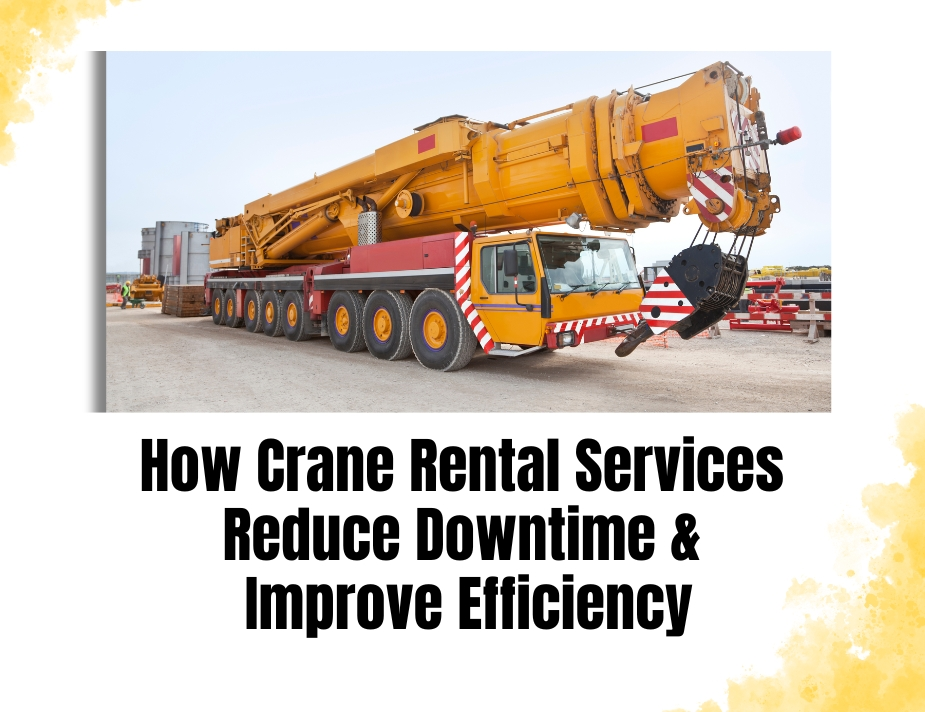
How Crane Rental Services Reduce Downtime & Improve Efficiency
That is where crane rental services have recently become quite a strategic solution. It is no longer just about minimizing delays associated with equipment; it sets up a fundamentally different way contractors view project efficiency. With temporary crane solutions, advanced fleet management, and procurement platforms such as MYCRANE, the construction industry is finding that rental services can offer so much more than access to heavy-lifting equipment: a pathway to unrivaled operational excellence.
The Hidden Costs of Construction Downtime

But before looking at how crane rental services address this problem of inefficiency, it is necessary first to understand what true downtime costs are in construction operations. Depending on the scale, estimates for a single day of delay at a big construction site run from $20,000 to $80,000, and these figures multiply exponentially when one considers cascade effects across subcontractors, material deliveries, and labor scheduling. In instances where a purchased crane proves mechanically faulty or is inefficient against changing project needs, contractors must face not only immediate disruption but also the compounding costs of idle labor, equipment repositioning, and even possible contractual penalties.
Ownership of conventional equipment heightens these problems on many counts. Owned cranes bring with them their maintenance personnel, storage space, and insurance, whether put to work at the site or not. In case of breakdowns, one has to hunt for spares and undertake repairs while suffering the full impact of operational delays. It is here that ownership burdens create a condition wherein the very equipment that was meant to enhance productivity becomes a liability, sapping resources and curtailing operational flexibility.
Temporary Crane Solutions: Where Flexibility Meets Reliability
In general, the crane rental business is based on providing a temporary crane solution to precisely match the needs of the project. Unlike owned equipment, which is a fixed-valued and fixed-use asset irrespective of actual utilization, rental cranes allow the contractor to deploy only such capacity as is required in particular phases of a project without any long-term financial commitments. This seasonal demand for construction translates into sharp peaks and valleys when it comes to the need for equipment. A residential development contractor might need six tower cranes in the spring and summer seasons of construction, but in the winter months, they need only two. It is there that rental would enable them to scale up or down with their crane fleet, using only the number of cranes needed when active projects require them. In such a model, they would avoid the very expensive proposition of keeping idle capacity all year while still having enough resources during periods of peak demand.
Other project-specific requirements clearly illustrate the value of temporary crane solutions. One can imagine a contractor who has been hired to perform one-time, industrial-plant construction that requires a 500-ton crawler crane for three months in order to set up huge process equipment. Clearly, it does not make economic sense to purchase that type of specialized equipment for one-time use, but without it, neither can the job be performed. Rentals come into play here, enabling him to have just the type of heavy-duty, specialized cranes he needs without any burden of long-term ownership in the process.
Another powerful use case is the betterment of infrastructure. Be it modernization of container terminals by port authorities or upgrading bridges by municipalities, operations must go along smoothly while construction is on. Renting additional cranes for the upgrade period will make sure stability of throughput without need for organizations to expand fleets beyond post-project needs.
Value-for-Money Crane Hire: It's Not All About the Rate

Actually, if the contractors are after affordable crane hire, the study would have to go much further than comparing daily or monthly rental rates. As a matter of fact, a proper comparison of ownership and rental costs would illustrate that the real value proposition of rental can be derived through several financial mechanisms.
First and foremost, there is avoidance of capital expenditure. The new 200-ton mobile crane costs upwards of $1.5 million, requiring large outlays of cash or financing arrangements that tie up the balance sheets and reduce credit availability. This rental agreement converts this capital expenditure into an operating expense, therefore freeing resources for the core business-be it bidding on new work, skilled labor, or investments in competitive advantage.
Subtracting maintenance cost produces considerable savings, that are usually underestimated by the owner of equipment. Professional rental firms maintain their fleets to manufacturer specifications and include preventive maintenance in the period between rentals. Wear items are checked and replaced or rebuilt in anticipation of their failure. These maintenance programmes, estimated at 10-15% annually of the value of the equipment, are transferred to the rental provider. In addition to the direct costs of maintenance, the contractors avoid the administrative burden associated with scheduling inspections, finding parts, and taking care of technicians.
Insurance and storage add yet another layer of savings. Owned cranes need to be comprehensively insured year-round, have secure storage facilities with appropriate access and environmental protection, and usually require specialized security given the values of such pieces of equipment. This is usually wrapped into the rental rate for insurance on rentals, while the equipment returns to the provider's yard between projects, thus negating any need for storage.
Perhaps the least appreciated financial benefit is the flexibility that avoids depreciation losses. Construction equipment values are relentlessly depreciating regardless of use, with cranes losing 20-30% of purchase value within the first three years of ownership. The rental customer avoids this depreciation altogether, yet accesses current-generation equipment which the rental firm must change on a regular cycle to stay competitive.
Heavy Machinery Hire for Lifting: Gaining Access to Specialised Capability
The heavy equipment rental market opens to the contractor capabilities that would be economically impossible with direct ownership. These large, modern construction projects also require cranes with specific features, such as extreme lifting capacity, exceptional reach, compact dimensions for urban sites, or advanced control systems that enable precise placement.
Consider the infrastructure contractor bidding on a bridge construction project with some pre-cast segments to be set with equipment capable of handling 700 tons. Equipment in this class is literally an investment in the seven-figure range, paying off only with steady use over several years. For most contractors, needs at this level come around so infrequently that renting heavy lifting equipment is the only realistic option.
Other examples of specialist genres in which the economics of rent have made the case for temporary solutions very strong include mobile harbor cranes. Such versatile machines handle containers, project cargo, and bulk materials in port environments; with their marine-grade specifications and high capacity, however, the purchase prices are correspondingly high. This is particularly so in cases where rental fleets have normally been used by most port operators with the view of supplementing permanent installations throughout seasonal peaks or such periods when temporary expansions in capacity are temporarily needed
The rental providers maintain extensive inventories for just such specialized needs. The MYCRANE network is made up of more than 1,700 crane suppliers operating over 15,000 cranes across India, including all major crane types-from compact city cranes to huge crawler and all-terrain machines. That means wide-ranging inventory so that contractors can match their equipment exactly to project requirements, without having to maintain rarely used specialized equipment themselves.
Productivity in construction is the operational equation of efficiency.

Beyond those monetary considerations, the nature of crane rentals is such that they can go a long way in improving productivity on site. This is partly one of reliability because the renting company stakes its reputation on guarantees that the equipment is there and will work, supported by comprehensive programs of preventive maintenance to eradicate unplanned downtime. If any rented crane suffers mechanical problems, then a rental agreement generally allows rapid replacement to hold at least any resulting construction delays at bay.
This is quite different from the scenarios with owned equipment where mechanical failures can be monumental logistic headaches, and someone has to find replacement parts, schedule repair technicians, and often wait days or weeks for specialized components while projects stall. Of course, the cost differential does not stop at the rental rate; it extends right into the avoided downtime and schedule disruptions that equipment failures inevitably cause.
The other productivity enhancer is the availability of expert operators. In most crane rental agreements, there are arrangements for highly experienced and trained operators. These personnel have special knowledge concerning the unit deployed on particular jobs. They know the strong and weak points of the machine inside out because they carry out lifts effectively and according to laid-down safety procedures. In contrast, owning requires further employment costs, training, and retaining the challenge of proficiencies across multi-units.
Another productivity benefit deriving from technology integration emanates from the rental fleets. Major rental firms will commonly equip their cranes with telematics systems, load moment indicators, and digital control interfaces, each of which becomes increasingly required for the state-of-the-art project. The contractor will find it easy to take such technological advances without the capital investment required to retrofit owned equipment-or the risk that his decisions vis-à-vis system choice become obsolete as those systems change and evolve.
Digital Transformation: The MYCRANE Way in Revolutionizing Procurement of Cranes
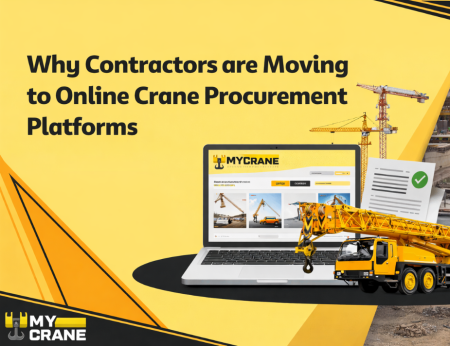
Conventionally, procurement in crane rental was a very labor-intensive process of contacting several suppliers, negotiating each separately, comparing quotations not on a like-for-like basis, and maintaining a separate relationship for each rental. One word: highly fragmented. It took up a lot of precious project management time with limited visibility into market rates or equipment availability.
MYCRANE injects several efficiencies into the latter through its comprehensive digital platform; it turns what is usually a manual and relationship-driven process of crane procurement into an intuitive and transparent marketplace. Value from the architecture shows up along many dimensions that directly impacts requirements to reduce downtime and improve efficiency.
Gone is the conventional process of contacting several suppliers. Instead, it allows one detailed inquiry per project, which details the location of the project site, the required capacity of the crane, the duration, and the operational constraints. The MYCRANE algorithms automatically match these requirements against its network of over 1,700 registered suppliers, ensuring that the request reaches only those qualified providers with suitable equipment. It saves days of research into suppliers by contractors and offers comprehensive coverage of the market.
Probably the most striking feature of this innovation is the transparency accorded by competitive bidding: several qualified suppliers enter proposals within 1-5 business days, all on one dashboard where contractors can compare mobilization costs, rental rates, standby charges, and supplier credentials side by side. In addition to the transparency that forces competitive pricing, quality is guaranteed through the MYCRANE rating system of its suppliers regarding their safety records, condition of the equipment, and service reliability.
One of the very basic problems that lie at the heart of crane procurement is what equipment is right for particular lifting needs. This Crane Selector tool, on this platform, solves the problem by asking the user to input data on load weight, height of lift, radius, and other operating parameters, after which the system suggests crane types and capacities from its database. Such facilities prove immensely helpful for a contractor involved with projects of diverse types where in-house expertise in matters of selection of cranes is limited. This negates the possibility of undersized equipment-with consequent delays in project completion-and oversized equipment, both leading to increased costs.
It puts all procurement documentation-inquiries, quotations, contracts, and technical specifications-into one accessible location, thereby enabling seamless project management, full with audit trails to underpin quality assurance and dispute resolution. It further avoids the mess created by scattered emails, calls, and paper documents associated with traditional procurement for contractors dealing with a number of projects at one time.
Real-World Impact: Case Studies for Downtime Reduction
These accruing advantages from crane rental services find concrete manifestations in several building situations. Indeed, certain case studies do reflect the fact that these temporary solutions in cranes do offer tangible improvement in improving project timelines and cost management.
Success in Infrastructure Development:
The construction of metro rail over various sites by a major metropolitan transit authority called for the need to have tower cranes perform station structure work. The authority tapped MYCRANE to procure 12 tower cranes across six locations on 18-month rental agreements instead of buying cranes that would be redundant upon completion. The immediate benefits this approach offered are three-fold-first, the equipment comes to the site fully commissioned and ready to work, not like the purchase of new cranes which requires commissioning to take up to 4-6 weeks; secondly, the rental agreements provide for maintenance and operators such that the Authority's project teams can wholly focus on construction rather than equipment management; lastly, at completion, stations return the cranes to suppliers without disposition challenges and losses to the authority from depreciation. The project was completed on time while crane-related downtime was eliminated through the provider's preventive maintenance and rapid response protocols.
Efficient Commercial Construction:
A real estate developer simultaneously building several residential towers felt the challenge brought about by equipment allocation due to the development of overlapping phases of building. The developer employed MYCRANE's platform for the purpose of executing a flexible crane rental approach. Equipment was matched to the current phase of construction, portfolio-wide. Larger capacity cranes were temporarily deployed during foundation and core structure works requiring heavy lifting capacity. Lighter loads and shorter lifts in the finishing stages of buildings reduced the need for heavier and more costly equipment, while moving towards more economical one. This dynamic approach cut total crane costs by roughly 30% compared to maintaining consistent equipment levels across a project, while averting the idle time that characterizes fixed fleet approaches. According to the developer, the overall incidence of equipment-related schedule delays was reduced from an average of 12 days per project to less than 2 days, which was attributed to the reliability of the rental providers and capability of the platform to quickly source replacement equipment whenever original equipment developed any issues.
Industrial Plant Construction:
Completion of an expanded petrochemical facility required the precision placement of large process vessels weighing up to 400 tons. For the critical, three-month vessel installation phase, the contractor depended on MYCRANE to provide a specialist 600-ton crawler crane. The rental contract included engineering support for lift planning-a guarantee that all of the rigging calculations and methodology would meet the safety requirements of the project. Without having to buy such highly specialized equipment capital outlay in excess of $3+ million contractor had access to expert resources that greatly optimized the efficiency of the lifts. All vessel placements happened on schedule without any safety incidents, thus proving that even in extremely complex, high-stakes operations, temporary crane solutions could indeed work.
Emergency Response/Rapid Deployment:
When a large storm damaged the roof structures of a manufacturing facility, for example, production recovery was highly dependent on replacing the damaged roof as quickly as possible. This time, the facility manager utilized the urgent inquiry feature of MYCRANE to procure a mobile crane within 24 hours despite extremely short notice and immediate availability. The platform found one supplier with appropriate equipment that was positioned within 100 km, with the crane arriving within 36 hours of the original inquiry. Accordingly, this meant that the production downtime was just 4 days, compared with the widely estimated 2-3 weeks if traditional procurement channels had been pursued. This further illustrates how digital crane rental platforms are able to facilitate a speed of response not possible with owned equipment, which is encumbered by maintenance schedules, operator availability, and transport logistics.
Technology-Enabled Maintenance-Avoiding Downtime Before It Ever Happens
This, therefore, influenced modern crane rental services and changed the whole equation of reliability. Companies mounted sensors on the fleets that continually monitor such important parameters as structural stress, hydraulic system performance, electrical component temperature, and operational cycles. It is this continuous monitoring that generates streams of data analyzed by machine learning algorithms to identify subtle patterns indicative of developing issues.
When sensor anomalies detect imminent failure, the rental providers will schedule proactive maintenance before that failure could occur. Predictively, this means there are no sudden breakdowns typical of reactive strategies, and a major root cause of construction sites experiencing downtime gets substantially eliminated. These benefits of such sophisticated maintenance capability are possible without any investment in the monitoring infrastructure or development of analytics expertise.
Data from the monitoring systems further optimizes this maintenance scheduling around the needs of the project. Rather than performing scheduled maintenance on rigid intervals irrespective of the actual condition of the equipment or timing of a project, the rental providers are able to defer or advance the maintenance activities so that minimal disruption may occur in the most critical phases of construction. Such flexibility will make sure that equipment availability is assured just when it is most required by projects.
Sustainability benefits of rental models
Beyond these near-term considerations of efficiency and cost, crane rental services support the construction industry in the realization of considerable sustainability benefits-in tune with the growing focus on the environment. The very nature of the business model is one that is predisposed to make for efficient utilization of equipment. Rather than having scores of contractors owning cranes that may stay idle most of the time, rental models concentrate ownership among select providers who have vested interests in making sure it finds its maximum utilization. Such concentration reduces the number of manufactured and operational cranes to serve the same volume of construction, hence reducing the overall environmental footprint of the industry.
These modern fleets have a greater share of electrics and hybrids, and these represent far fewer emissions and noise compared to the conventionals driven by diesel. Shore power-connectible tower cranes, electric rubber-tired gantries, hybrid mobiles form the next generation construction lift core, and rental is going to be the superior way. This is how contractors can acquire environmentally friendly machines without bearing the capital risk of acquiring equipment which may end up being obsolete because regulations are constantly changing in power systems.
The rental models would have equipment with multiple users over its lifetime, refurbishment, and recycling within this fundamental layer of the circular economy framing. This will also resonate within sustainability frameworks that favor product-as-a-service over ownership-based approaches. This resonance will be increasingly important in cases where corporations come under pressure from stakeholders on environmental performance and regulations begin to demand emissions reductions.
Procurement on a strategic level, through the end-to-end MYCRANE ecosystem.
Indeed, the MYCRANE platform is far more than a crane-matching platform; rather, it is an end-to-end ecosystem that will address everything related to lifting operations. Besides, method statements, lift planning, and structural calculations are amongst the most in-demand support services for any complex lifting operation. It is these technical services which are in demand, particularly when unusual loads have to be moved or such operations have to be undertaken within constrained working environments, where such precision in planning may well ward off potential costly mistakes.
Its Responsibility Matrix feature targets one of the biggest causes of rental disputes: the immediate definition of the scope of service. The contractor stipulates whether operators, maintenance, insurance, and ancillary services are to be provided by suppliers or will remain contractor responsibilities. This clarity ensures that the rental agreement precisely fits the expectation and capability of an operation; therefore, there can be no misunderstandings leading to delay and adding cost.
Apart from the cranes, the MYCRANE network will provide rigging gear, transportation services, and whatever ancillary support may be required by a project. This integrated approach ensures single-point procurement and reduces administrative overheads while ensuring that all components of the project will mesh properly. Other than having to interface with different relationships for cranes, rigging, transport, and engineering support, the contractors interface only with one that seamlessly coordinates these elements.
This newly introduced marketplace for equipment extends the MYCRANE value proposition for those contractors who are considering equipment purchases in association with rental decisions, by providing verified listings of used equipment, with all relevant documentation and inspection reports, even logistics support for the transparency that reduces transaction risks. The addition does so by realizing that optimal equipment strategies often blend rental and ownership based on utilization patterns and project portfolios.
The financial planning benefits: cost stability and flow management.

Crane rental services offer a more compelling financial planning argument than a pure cost comparison. In a word, this transformation of capital expenses into operating expenses changes the way a building company views its books. The rental costs relate to the revenues that a project generates over the same period; therefore, a natural cash flow timing is achieved. When activities go up, so do the rental costs proportionally; in return, revenues accrued with more work increase. When the activities throttle down, the rental costs go down naturally, as equipment goes back to the suppliers without the cash drain of maintaining an idle fleet.
Such alignment is very important, especially for those contractors with seasonal businesses or economic uncertainty. Instead of fixed costs, irrespective of market conditions, rental models provide variable cost structures that automatically adjust with the volume of the business. This could prove to be a major key differentiator in financial flexibility between surviving from economic downturns and facing liquidity crises.
Rental agreements protect capital availability and the strength of the balance sheet. Investments required to build fleets of cranes can easily reach into the millions of dollars, thus tying up credit lines that could otherwise finance any opportunities for growth, requirements for working capital, or strategic investments. By replacing rental relationships for equipment purchase, contractors maintain financial flexibility to pursue business development opportunities arising on short notice.
Improvement in Operator Skill and Safety
While in reality, professional crane operators have not gained wide recognition yet, they are actually a very important component of added value for such rental services. The houses generally keep lists of such operators trained and certified with in-depth exposure to their machinery. Such professionals possess specialized knowledge, thereby enhancing efficiency and safety on most counts.
The experienced operator executes lifts with more economy than the less-experienced operator. He is generally aware of the most effective rigging arrangement, the capabilities and limitations of his equipment, and the circumstances that call for special precautions. This degree of expertise reduces the length of lift cycles, eliminates much repositioning of rigging, and avoids the trial-and-error manner typical of the less-experienced operations.
Such knowledge brought into the project by rental operators exponentially increases safety performance. Most crane-related accidents result either from operating the equipment beyond capable design or from failing to identify dangerous site conditions. Seasoned rental operators have been exposed to such a variety of circumstances on so many projects that they develop judgment that can prevent incidents before they occur. For contractors in whom safety performance is high priority, either for ethics, insurance concerns, or client mandates, such expertise becomes extremely valuable.
The training burden for maintaining operator proficiency across diverse types is thus high for owners. Most crane types, including tower cranes, mobile cranes, and crawler cranes, usually have different skills relating to operation and normally different licenses. Qualifying the operators across this spectrum of equipment, and performing the regular operation required to sustain this proficiency, is costly and logistically complicated. The services nullify this challenge since the rental services include operators whose full-time concentration involves their respective types of equipment.
Long-term renting strategies: Bridging ownership and short-term hire
Although most rentals meet immediate needs for a project, long-term rentals offer other opportunities to the contractor, blending many of the benefits of ownership with those of traditional rental. Long-term, multiyear rentals for core equipment needs can provide an assurance of availability similar to that afforded by ownership but with access to the flexibility inherent in the rental relationship.
The port operators are illustrative of the applications of long-term rentals. Container terminals have quite stable crane capacity requirements for vessel operations but seasonality in volume, together with long-term uncertainty as to cargo patterns, makes pure ownership risky. Multi-year rentals of part of crane requirements provide stable baseline capacity while preserving flexibility to adjust equipment levels as market conditions change. These types of contracts generally offer superior rates to those available for short-term rentals without capital requirements and disposition risks of ownership.
Long-term strategies work out to the benefit of building contractors operating steady, ongoing project pipelines. For instance, the contractor executing an ongoing stream of high-rise residential constructions carries out three long-term rentals for tower cranes, supplementing them with short-term rentals when specific projects so require. The hybrid model offers a perfect mix between cost efficiency and assurance of capacity.
Conclusion: The Strategic Imperative for Rental Services

In other words, the question of whether crane rental services hold any advantages over outright equipment ownership is no longer at issue for construction contractors; instead, the focus has become how to strategize rentals in ways that minimize downtime while maximizing efficiencies. Indeed, financial metrics, operational performances, and strategic flexibility will continue to prove that the usage of temporary crane solutions through digital platforms like MYCRANE is are best practice for modern construction operations. NONE It represents a marketplace imbued with transparency, smart equipment matching, competitive bid mechanisms, and full support services that get rid of the friction that held rental adoption back.
In fact, it is the value from cost-effective crane hiring that far outweighs anything which could be derived from a basic rental rate comparison. Besides capital preservation, there is the elimination of maintenance, technological currency, operator expertise, and flexibility in scheduling-all threaded together in one compound benefit at the very core of enhanced competitive positioning. All these enable such contractors to reinvest their resources in core competencies, being far more aggressive in their project bidding, quick to take advantage of market opportunities, and able to maintain financial flexibility that ownership models simply cannot provide.
Indeed, gains in productivity from heavy lifting equipment rentals on site come not just from the avoidance of downtime but, more positively, through speeded-up project schedules, optimum matching of equipment, effective maintenance protocols, and rapid substitution of equipment as needs change. The identified case studies did repeat some patterns throughout this analysis, namely, rental services allow a quicker project start with smoother execution and more predictable completion time than is possible with an owned equipment alternative.
MYCRANE's role in this shift brings into sharp focus how digital platforms amplify inherent advantages of rental. Efficiency in procurement, price transparency, quality assurance, and relationship management are all ways in which crane rental can be transformed for contractors from a transactional necessity into a strategic capability.
While margins remain under pressure, operational excellence is no longer optional; it is an assumption that crane rental services can deliver as construction projects increasingly bear the imprint of complexity. Winners will be those contractors who understand that success depends on resources being focused on core competencies and find specialist providers to partner with for equipment needs. It is in this strategic frame that crane rental services enabled through sophisticated platforms like MYCRANE become foundational elements in the competitive advantage of modern construction.

Subscribe Now
Subscribe To Our New Letter Today!